Future of Luxury Fashion: Innovation, Technology, and the Next Frontier
Discover the future of luxury fashion: how AI, blockchain, digital couture, bio-fabricated materials and sustainability are reshaping maisons and the new consumer.…
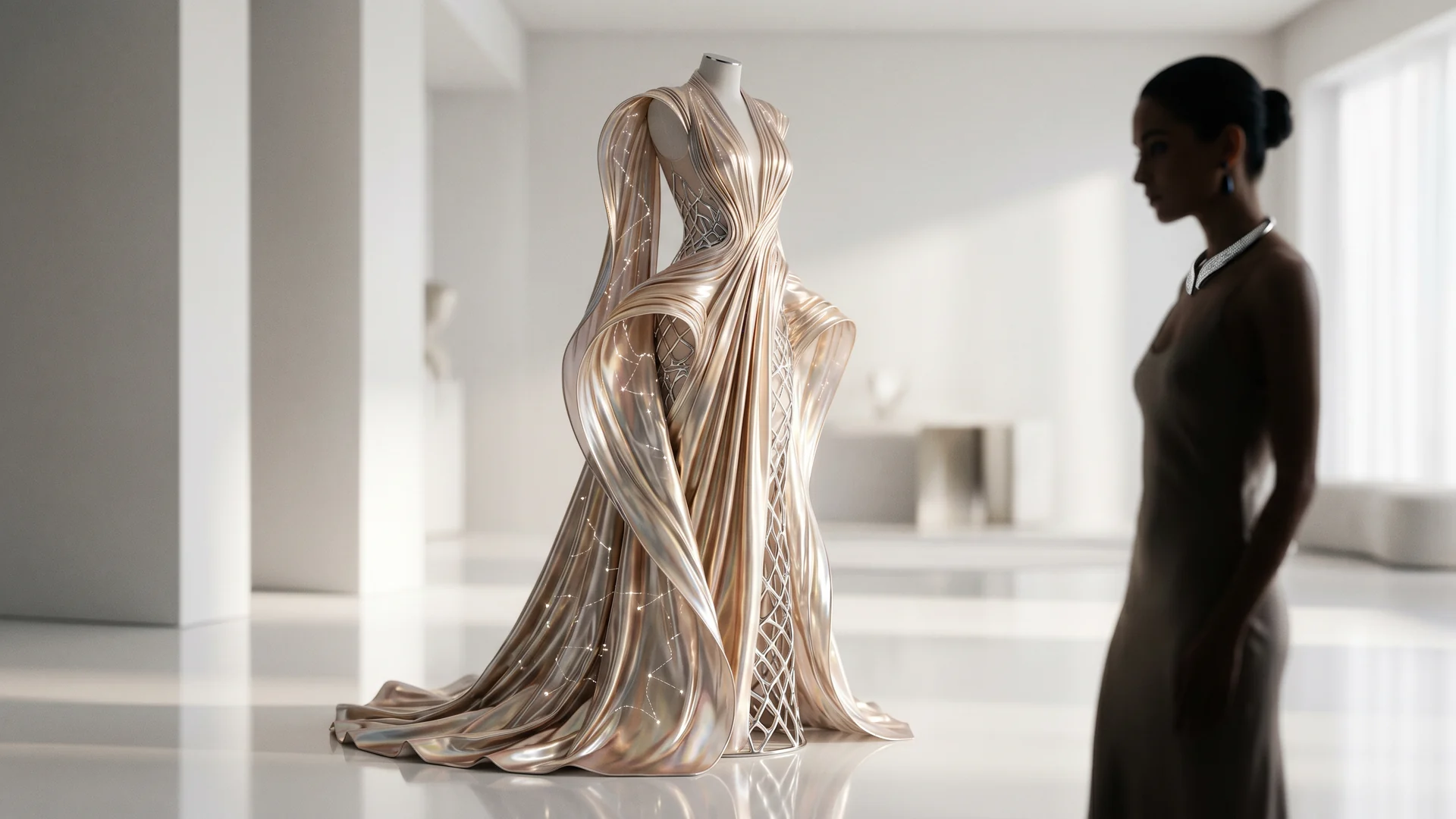
The future of luxury fashion will be defined not by a single technology but by how gracefully maisons integrate digital experiences, AI, sustainability, and values-driven consumers at once.
Key Takeaways
- Digital fashion is emerging as a genuine asset class, with digital-only houses like The Fabricant proving virtual garments can carry the exclusivity and price of luxury without physical cloth.
- Blockchain gives each item a tamper-resistant digital record that establishes provenance, fights counterfeiting, and underpins trust in the booming luxury resale market.
- Generative AI accelerates design by producing variations in seconds and powers personalization engines that recreate the intimacy of a personal shopper at scale.
- On-demand manufacturing, enabled by AI forecasting and robotics, tackles overproduction by making pieces for the individual rather than for speculative inventory.
- Advanced materials such as bio-fabricated leathers grown from mycelium, recycled fibers, and plant-based alternatives are reinventing what luxury garments are made from.
- Sustainability and circularity, including resale, rental, and repair, are shifting from optional differentiators to competitive necessities that reinforce luxury's promise that an object is worth keeping.
- The new luxury consumer is digitally native, socially conscious, and values-driven, prizing meaning over status, experience alongside ownership, and authenticity that matches a brand's words with its actions.
🌐 Also available in: Deutsch
Luxury Fashion at a Crossroads
The luxury fashion industry stands at a crossroads, facing a future shaped by technological revolution, shifting consumer values, and unprecedented global challenges. For generations, the houses that defined luxury — the Parisian and Milanese maisons whose names became shorthand for taste and craft — operated within a remarkably stable set of rules. Scarcity, heritage, and the human hand were the currency of desirability, and the rhythm of the seasonal show dictated the calendar of an entire industry.
That stability is now giving way to something far more fluid. Understanding where the industry is heading is essential for brands, investors, and consumers alike — not as a matter of speculation, but as a practical necessity. The forces reshaping luxury are not arriving one at a time; digital transformation, artificial intelligence, sustainability, and a new generation of values-driven consumers are converging at once. The maisons that read these currents correctly will define the next century of style. Those that mistake them for passing fads risk slipping into irrelevance.
The Digital Transformation of Couture
Digital fashion is no longer a curiosity — it is an emerging asset class. Virtual garments, wearable in gaming environments and across social media, have begun to command genuine value, untethered from the cost of cloth, thread, or shipping. Digital-only fashion houses such as The Fabricant have demonstrated that clothing need not be physical to carry the weight, exclusivity, and price of luxury. A garment that exists only as light on a screen can still be designed, owned, coveted, and worn — within the contexts where it has meaning.
Established luxury brands have taken note. Many are investing in gaming collaborations, augmented-reality try-on technology, and immersive virtual showrooms that let a client examine a handbag or tailored coat in three dimensions before it is ever produced. These experiences serve a dual purpose: they deepen engagement with younger audiences who live much of their social lives online, and they extend the reach of brands whose physical boutiques can only ever be in so many cities.
Phygital Experiences
The most compelling developments sit at the intersection of physical and digital — the so-called “phygital” experience. A buyer might acquire a couture piece and simultaneously receive a digital twin to wear in virtual spaces, or unlock exclusive online content tied to a physical purchase. Rather than replacing the tactile pleasures of luxury, the digital layer enriches them, turning a single object into an experience that unfolds across multiple worlds.

Blockchain, Authentication, and Digital Ownership
Few problems have plagued luxury fashion as persistently as counterfeiting. Blockchain technology offers a credible answer. By assigning each item a tamper-resistant digital record, brands can establish provenance, track ownership through successive resales, and create verifiable digital twins of physical luxury goods. A handbag can carry a permanent, transparent history from the atelier to its current owner.
This capability matters for several reasons that compound one another:
- Authentication. Verifiable records make it dramatically harder for counterfeits to pass as genuine, protecting both brand equity and buyers.
- Resale and circularity. The booming secondary market for luxury depends on trust. Provable authenticity gives pre-owned pieces confidence and value, supporting more sustainable patterns of ownership.
- New revenue streams. Digital exclusivity — limited digital editions, ownership perks, and members-only experiences — opens commercial avenues that did not exist a decade ago.
Digital collectibles and tokenized ownership remain an evolving field, and brands are wise to approach them with the same discernment they apply to any new material. The durable value lies less in speculation than in the underlying ability to prove what is real — a quality that has always been at the heart of luxury.
Artificial Intelligence and the Creative Process
Artificial intelligence is revolutionizing design, manufacturing, and the customer experience in equal measure. Generative AI tools can produce design variations in seconds, allowing creative directors to explore a breadth of possibilities that would once have taken human teams weeks of sketching and draping. Used well, these tools do not replace the designer’s vision; they accelerate it, surfacing unexpected directions and freeing creative talent to focus on judgment, refinement, and meaning.
The relationship between human craft and machine assistance is the defining creative question of the moment. Luxury has always been a story about people — the artisan’s hand, the designer’s eye, the founder’s obsession. AI is most powerful in this context not as a substitute for that humanity but as an amplifier of it, handling the laborious and the repetitive so that scarce creative attention can be spent where it counts.
Personalization at Scale
On the client-facing side, AI-powered personalization engines are creating hyper-customized shopping experiences, anticipating preferences with remarkable accuracy. The ambition is to recreate, at scale, the intimacy of the personal shopper who knows a client’s taste, history, and aspirations. A truly personalized luxury experience might suggest a piece before the client has thought to want it, tailor communications to individual sensibilities, and remember the details that make a customer feel genuinely known. Handled with care and respect for privacy, this is a return to luxury’s oldest virtue — service so attentive it feels like friendship.
On-Demand Manufacturing and the End of Overproduction
One of fashion’s most significant and least visible problems is overproduction — the unsold inventory that ends up discounted, destroyed, or discarded. On-demand manufacturing, enabled by AI forecasting and advanced robotics, promises to address this at the root. When pieces are produced in response to genuine demand rather than speculative forecasts, waste falls, capital is freed, and the wasteful cycle of overstock is broken.
For luxury in particular, made-to-order production is a natural fit. Exclusivity and bespoke craftsmanship have always been part of the proposition; technology now makes it possible to extend that individualization further and faster. The luxury fashion of tomorrow will increasingly be made for the individual, not for inventory — a shift that aligns commercial logic and environmental responsibility in a way that rarely happens so neatly.
Advanced Materials and Bio-Fabrication
The materials of luxury are being reinvented in laboratories as much as in mills. Climate change and resource scarcity will fundamentally reshape what luxury garments are made from, and a new generation of innovators is responding with materials that were science fiction a generation ago. Among the most promising directions:
- Bio-fabricated leathers and textiles grown from mycelium, cultivated cells, or fermentation, offering the sensory richness of traditional materials without the environmental cost.
- Recycled and regenerated fibers that give discarded textiles and plastics a second life as high-quality cloth.
- Plant-based and lab-engineered alternatives to materials whose sourcing has long raised ethical or ecological concerns.
Innovation in this space matters precisely because luxury sets the cultural tone. When the most desirable houses validate a new material as worthy of their craft, it shifts perception across the entire industry. What begins as an experimental fabric in a flagship collection can, within a few seasons, become an accepted standard — and the prestige of luxury accelerates that adoption in a way regulation alone never could.

The Sustainability Imperative
Sustainability is moving from the margins to the center of luxury strategy. Bio-fabricated materials, lower-impact and carbon-conscious production processes, and fully circular business models are becoming competitive necessities rather than optional differentiators. The brands that survive and thrive will be those that embrace sustainability not as a constraint but as a creative opportunity — a fresh set of problems whose elegant solutions become part of the appeal.
Circularity, in particular, fits the DNA of luxury better than that of any other segment. Fine pieces have always been built to last, to be repaired, and to be handed down. Resale, rental, repair services, and take-back programs extend that longevity and deepen the relationship between maker and owner across years rather than seasons. Far from cheapening the brand, a well-run circular ecosystem reinforces the central luxury promise: that an object is worth keeping.
Transparency completes the picture. The luxury consumer of the future will be more knowledgeable, more discerning, and more values-driven, demanding to know where materials come from, how workers are treated, and what impact a purchase truly carries. The houses that meet this scrutiny openly will earn a trust that no amount of marketing can manufacture.
The New Luxury Consumer
Behind every shift in the industry is a changing customer. Younger generations are inheriting the role of luxury’s primary audience, and they bring different expectations. They are digitally native, socially conscious, and fluent in the language of authenticity. For them, a logo alone is rarely enough; they want to understand the story, the values, and the substance behind a brand before they commit.
This consumer prizes several things at once:
- Meaning over status. Possessions are increasingly chosen for what they say about a person’s values, not merely their spending power.
- Experience alongside ownership. Access, community, and memorable moments can matter as much as the object itself.
- Authenticity and consistency. A brand’s actions are expected to match its words, in sustainability, inclusivity, and craftsmanship alike.
For luxury houses, this is both a challenge and an invitation. The qualities this consumer demands — integrity, craft, longevity, genuine care — are precisely the qualities great maisons were founded upon. Meeting the moment is, in many ways, a matter of remembering who they have always been and expressing it for a new era.
The Next Frontier
The future of luxury fashion will not be defined by any single technology or trend, but by how gracefully the industry integrates many at once. Digital experiences will deepen rather than replace physical craft. Artificial intelligence will amplify human creativity rather than supplant it. Sustainability will become inseparable from desirability. And the consumer will sit at the center of it all, more empowered and more discerning than ever before.
What endures through every transformation is the essence of luxury itself: the pursuit of beauty, the reverence for craft, and the creation of objects and experiences that carry meaning beyond their function. The tools are changing; the soul is not. Luxury fashion will evolve from a symbol of wealth to a testament to wisdom — rewarding those who create beauty while honoring the planet and its people. The maisons that thrive in the decades ahead will be those that pair fearless innovation with timeless values, proving that the most modern luxury of all is to be both forward-looking and deeply, unmistakably human.
Frequently Asked Questions (FAQ)
What is the future of luxury fashion?
The future of luxury fashion will be shaped by the convergence of digital transformation, artificial intelligence, sustainability, and a new generation of values-driven consumers. Rather than one technology dominating, success depends on how gracefully maisons integrate many forces at once. Brands that read these currents correctly will define the next century of style, while those treating them as fads risk irrelevance.
How is digital fashion changing luxury brands?
Digital fashion is becoming an emerging asset class, with virtual garments commanding genuine value in gaming and social media. Digital-only houses like The Fabricant show clothing need not be physical to carry luxury's exclusivity and price. Established brands are investing in gaming collaborations, augmented-reality try-on, and immersive virtual showrooms to deepen engagement with younger online audiences and extend their global reach.
What are phygital experiences in luxury fashion?
Phygital experiences sit at the intersection of physical and digital luxury. A buyer might acquire a couture piece and simultaneously receive a digital twin to wear in virtual spaces, or unlock exclusive online content tied to a physical purchase. Rather than replacing the tactile pleasures of luxury, the digital layer enriches them, turning a single object into an experience that unfolds across multiple worlds.
How does blockchain help luxury fashion fight counterfeiting?
Blockchain assigns each luxury item a tamper-resistant digital record, letting brands establish provenance and track ownership through successive resales. Verifiable records make it far harder for counterfeits to pass as genuine, protecting brand equity and buyers. This proven authenticity also supports the booming secondary market, giving pre-owned pieces confidence and value while opening new revenue streams like limited digital editions and ownership perks.
How is artificial intelligence used in luxury fashion design?
Artificial intelligence revolutionizes luxury design, manufacturing, and customer experience. Generative AI tools produce design variations in seconds, letting creative directors explore possibilities that once took weeks. Used well, AI amplifies rather than replaces the designer's vision, handling repetitive work so creative attention goes where it counts. AI-powered personalization engines also recreate the intimacy of a personal shopper at scale, anticipating client preferences with remarkable accuracy.
How does on-demand manufacturing reduce waste in luxury fashion?
On-demand manufacturing, enabled by AI forecasting and advanced robotics, addresses overproduction at its root. When pieces are produced in response to genuine demand rather than speculative forecasts, waste falls, capital is freed, and the cycle of overstock is broken. For luxury, made-to-order production is a natural fit, extending the exclusivity and bespoke craftsmanship that have always been part of the proposition.
What sustainable materials are shaping the future of luxury fashion?
Luxury materials are being reinvented in laboratories as much as in mills. Promising directions include bio-fabricated leathers and textiles grown from mycelium, cultivated cells, or fermentation; recycled and regenerated fibers that give discarded textiles a second life; and plant-based, lab-engineered alternatives to ethically concerning materials. Because luxury sets the cultural tone, when desirable houses validate a new material, perception shifts across the entire industry.
What does the new luxury fashion consumer want?
The new luxury consumer is digitally native, socially conscious, and fluent in authenticity, wanting the story and values behind a brand before committing. They prize meaning over status, experience alongside ownership, and consistency between a brand's words and actions across sustainability, inclusivity, and craftsmanship. These demands for integrity, craft, and longevity are precisely the qualities great maisons were founded upon.

More from News

Celebrity Style Guide: Decoding the Fashion of the Famous
Decode celebrity style: how stylists, red carpet partnerships, and social media shape fashion, plus archetypes and tips to build a celebrity-inspired …

Luxury Lifestyle Guide: Curating the Art of Living Well
Discover the luxury lifestyle as the art of living well: quiet luxury in travel, wine, home design, wardrobe, watches, and wellness, curated with inte…

Perfume & Fragrance Guide: The Art of Olfactory Excellence
A complete perfume and fragrance guide: master top, heart and base notes, oil concentrations, olfactive families, heritage and niche houses, plus stor…